Platforms & SaaS

IM Beauty Glow

Beauty marketplace case study: web and mobile applications sharing an API for salon discovery, booking, packages and product commerce.

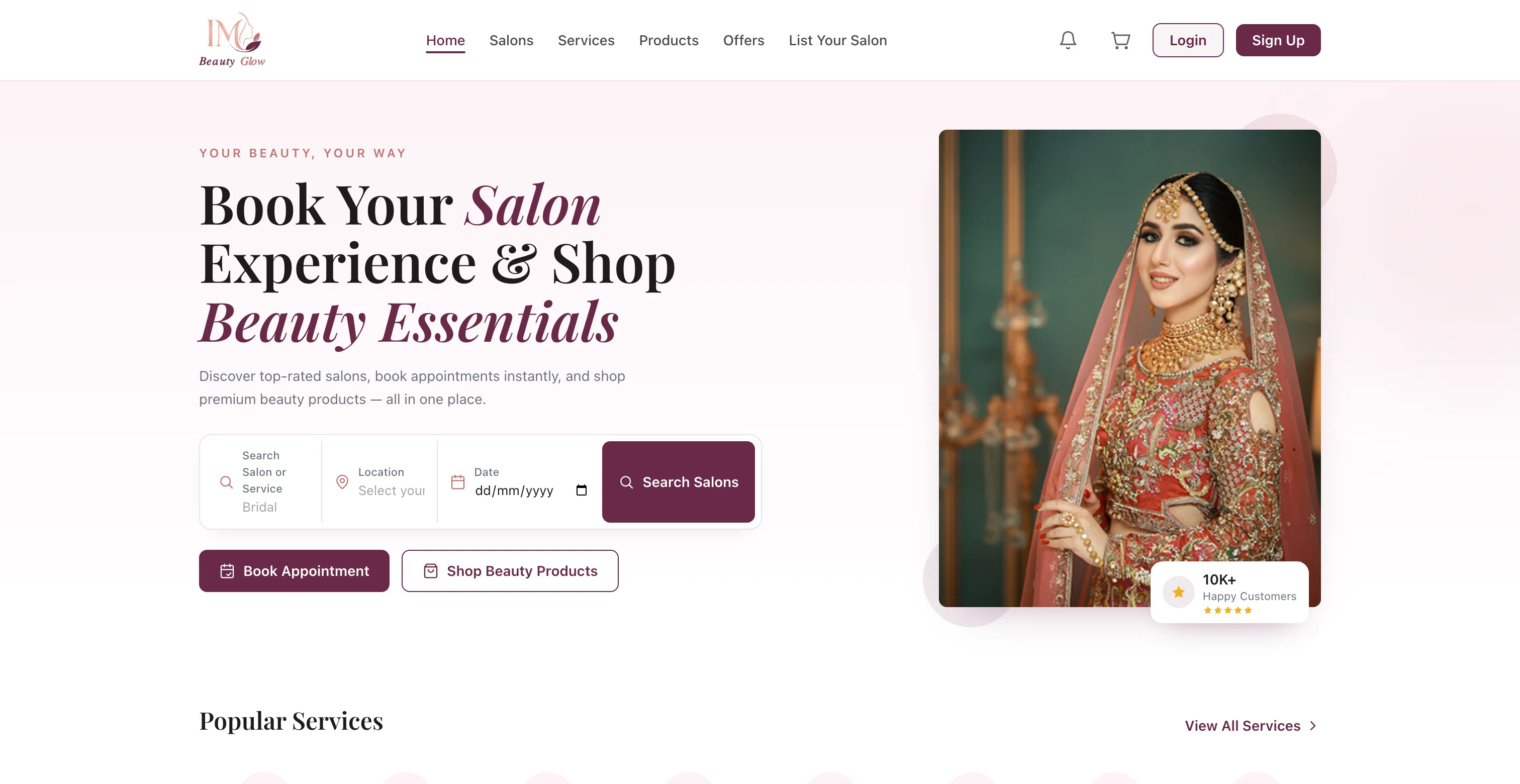
IM Beauty Glow homepage showing salon search, featured salons, and popular products
Home

Project overview

A connected platform built around real operating work.

IM Beauty Glow is a consumer-facing beauty and salon marketplace built as a matched pair: a Next.js storefront and a React Native companion app sharing the exact same backend API contract, down to the request field names. Guests discover salons, book individual services or bundled packages and offers, shop salon products, and manage their bookings and orders from either surface interchangeably. Salons list themselves and manage their presence through the same platform.

01

The challenge

The product had to solve connected operational problems.

Guests expect to research, book, and pay for a salon visit from whichever device is in front of them, and a mobile booking flow that quietly disagrees with the website's pricing or availability rules erodes trust immediately. The product also had to sell three different things — individual services, discounted packages, and time-boxed offers — through one booking flow without turning it into three separate systems.

02

Technical approach

A deliberate technical approach shaped the system.

The web app owns the commerce surface end to end — salon discovery, services, packages and offers, cart, checkout, payments, and account management — behind a typed API layer that keeps booking, cart, tax, and payment logic out of the presentation layer. The mobile app was built to mirror that contract exactly rather than re-implement it: before extending the app to book offers and packages, I verified the live web and backend validation rules first, then extended the existing appointment flow to accept three booking sources — service, offer, or package — through the same endpoint and the same optional identifiers the web app already sent. Package and offer pricing stays server-authoritative rather than recalculated on-device, so a discount can never drift between the two apps.

Salon self-onboarding

A closer look at the product.

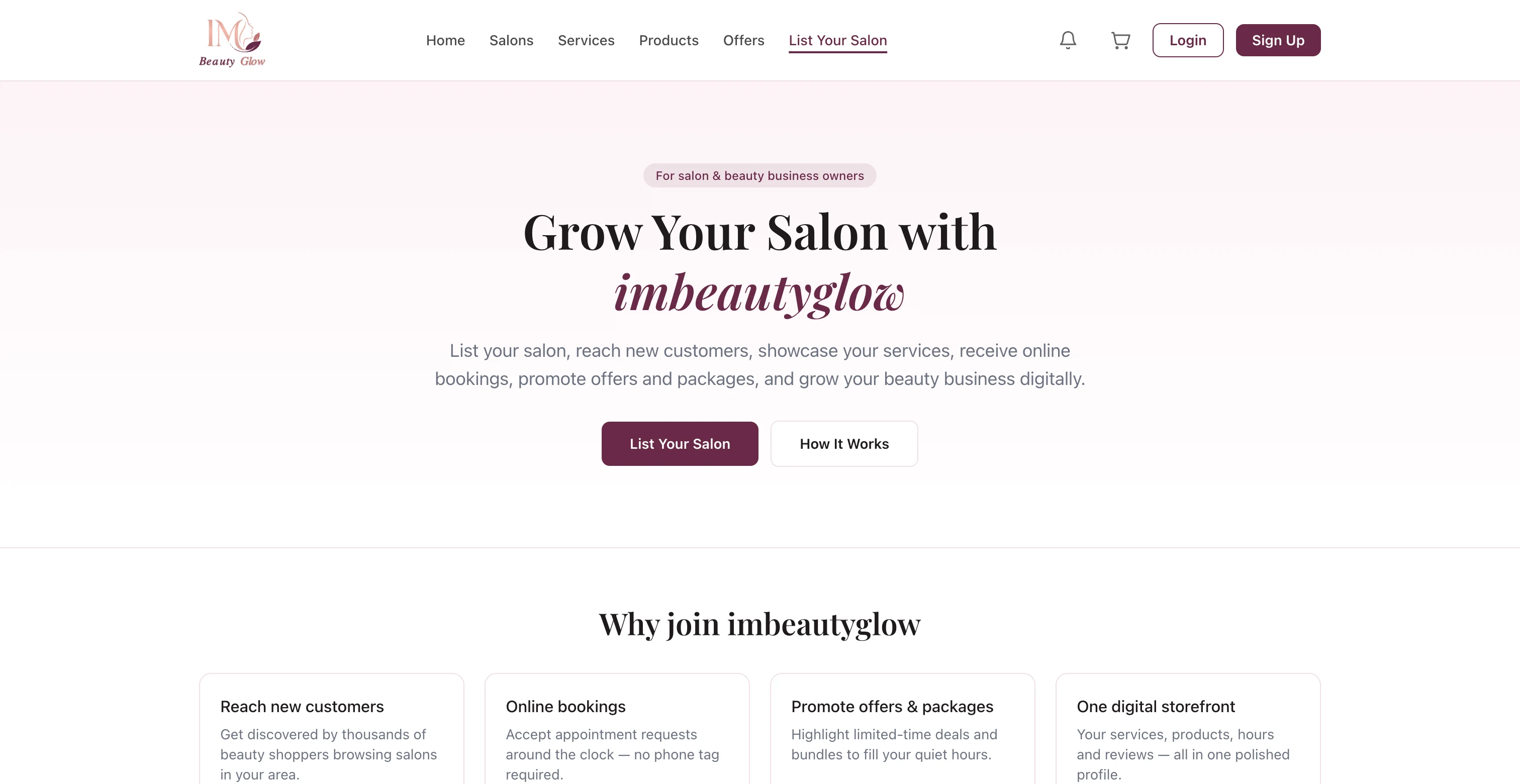
The "List Your Salon" flow salons use to self-onboard: owner details, business profile, location, services, and hours in one guided multi-step form.

IM Beauty Glow salon self-onboarding landing page with a multi-step registration form

Salon detail

A closer look at the product.

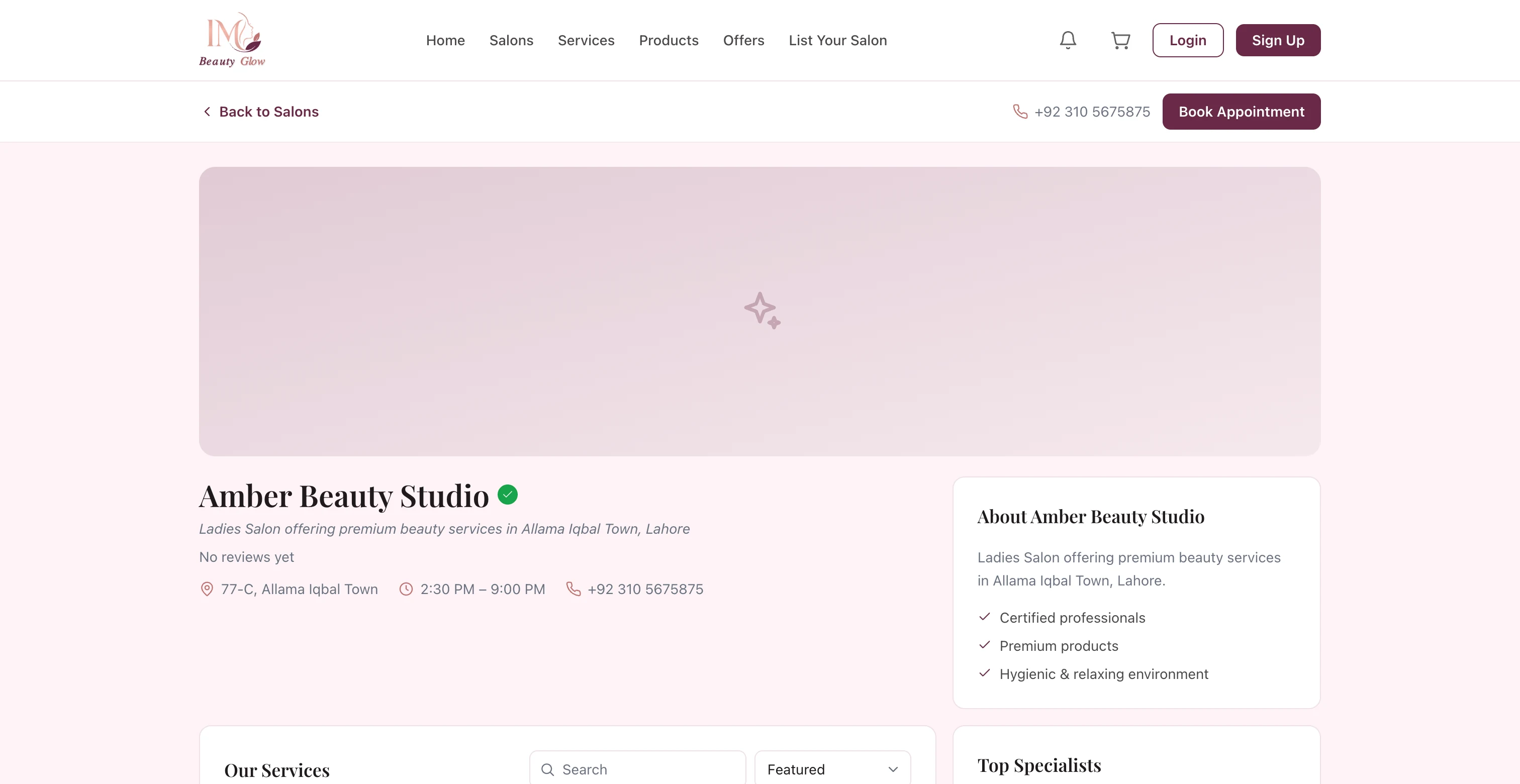
A salon detail page: service catalog with pricing, top specialists, and a direct booking action, the same view a guest uses on web or in the companion app.

IM Beauty Glow salon detail page for Amber Beauty Studio showing services list and top specialists

Products and interfaces

What we built

  • Consumer web storefront (salon discovery, booking, cart, checkout, account)
  • Companion iOS/Android app (React Native)
  • Salon self-onboarding flow ("List Your Salon")
  • Shared booking flow for services, packages, and offers
  • SEO pipeline (sitemap and .htaccess generated at build)
  • Push notification integration (OneSignal, Notifee)

Platform breadth

Core capabilities

  • Salon discovery, service booking, and package/offer booking from one shared flow
  • Product catalog, cart, and checkout across web and mobile
  • Booking, order, and review history synced to one account
  • Server-authoritative package and offer pricing — never recalculated on-device
  • Salon self-onboarding and listing management
  • Push notifications for bookings and order updates
  • Strict TypeScript across both apps behind one shared API contract

Evidence

Verified scope and outcomes

  1. Two client applications — web and mobile — built to one identical backend contract, down to the request field names
  2. 47 routed pages on the web storefront and 29 screens in the companion mobile app
  3. A booking flow extended to sell packages and offers with zero backend changes, by mirroring the existing validation contract exactly
  4. Zero TypeScript and zero ESLint errors verified across the mobile codebase after a dead-code and mock-data removal pass

Next project

Building something with similar complexity?

Let’s discuss the architecture, delivery plan, and operating model it needs.

Start a conversationExplore all projects →

Questions and answers

Questions about IM Beauty Glow

What is IM Beauty Glow?

IM Beauty Glow is a consumer-facing beauty and salon marketplace built as a matched pair: a Next.js storefront and a React Native companion app sharing the exact same backend API contract, down to the request field names. Guests discover salons, book individual services or bundled packages and offers, shop salon products, and manage their bookings and orders from either surface interchangeably. Salons list themselves and manage their presence through the same platform.

What did we build for IM Beauty Glow?

The work includes Consumer web storefront (salon discovery, booking, cart, checkout, account), Companion iOS/Android app (React Native), Salon self-onboarding flow ("List Your Salon"), Shared booking flow for services, packages, and offers, SEO pipeline (sitemap and .htaccess generated at build), Push notification integration (OneSignal, Notifee).

What was Muhammad Muzammil Qureshi’s role in IM Beauty Glow?

Muhammad Muzammil Qureshi served as Chief Technology Officer, with responsibility spanning technology direction, architecture, delivery, and the operating systems described in this case study.

Which technologies power IM Beauty Glow?

IM Beauty Glow uses Next.js 15 · React 19 · TypeScript · Tailwind CSS v4 · React Native 0.86.

How do the web and mobile apps stay consistent when booking a service, package, or offer?

The Next.js web app owns the commerce surface — discovery, services, packages and offers, cart, checkout, and account — behind a typed API layer that keeps booking, cart, tax, and payment logic out of the presentation layer. The React Native companion app mirrors that contract exactly, and package and offer pricing stays server-authoritative rather than recalculated on-device, so a discount can never drift between the two apps.

Can guests book more than individual services on IM Beauty Glow?

Yes. The same booking flow accepts three sources — an individual service, a discounted package, or a time-boxed offer — through one endpoint and the same optional identifiers the web app already sends, so packages and offers were added without building a separate booking system.

How do salons join the IM Beauty Glow platform?

Salons self-onboard through the "List Your Salon" flow, submitting their business details, location, services, and hours. Once listed, they manage their public profile, bookings, and product commerce through the same platform guests use.

What verification was done on IM Beauty Glow before launch?

The web storefront spans 47 routed pages and the companion mobile app 29 screens, both built to one identical backend contract down to the request field names. The mobile codebase was verified with zero TypeScript and zero ESLint errors after a dead-code and mock-data removal pass.

Discuss a related project →